

Best MPPT Controller for Solar Panels: 2024 Guide
The MPPT charge controller is a key device in photovoltaic systems that maximizes the efficiency of converting energy from solar panels into electricity. Thanks to the maximum power point tracking technology, the MPPT controller optimizes the battery charging process, thereby increasing the efficiency of the entire system.
The most important information
-
MPPT controllers maximize battery charging efficiency by adapting to the voltage and current of the solar panels.
-
Investing in MPPT controllers increases savings and energy independence thanks to higher efficiency and better optimization of the charging process compared to PWM controllers.
-
Choosing the right MPPT controller depends on the technical parameters of your photovoltaic system, and tools such as MPPT calculators can help you match the best model to your specific needs.
1 MPPT controller – what is it and how does it work?
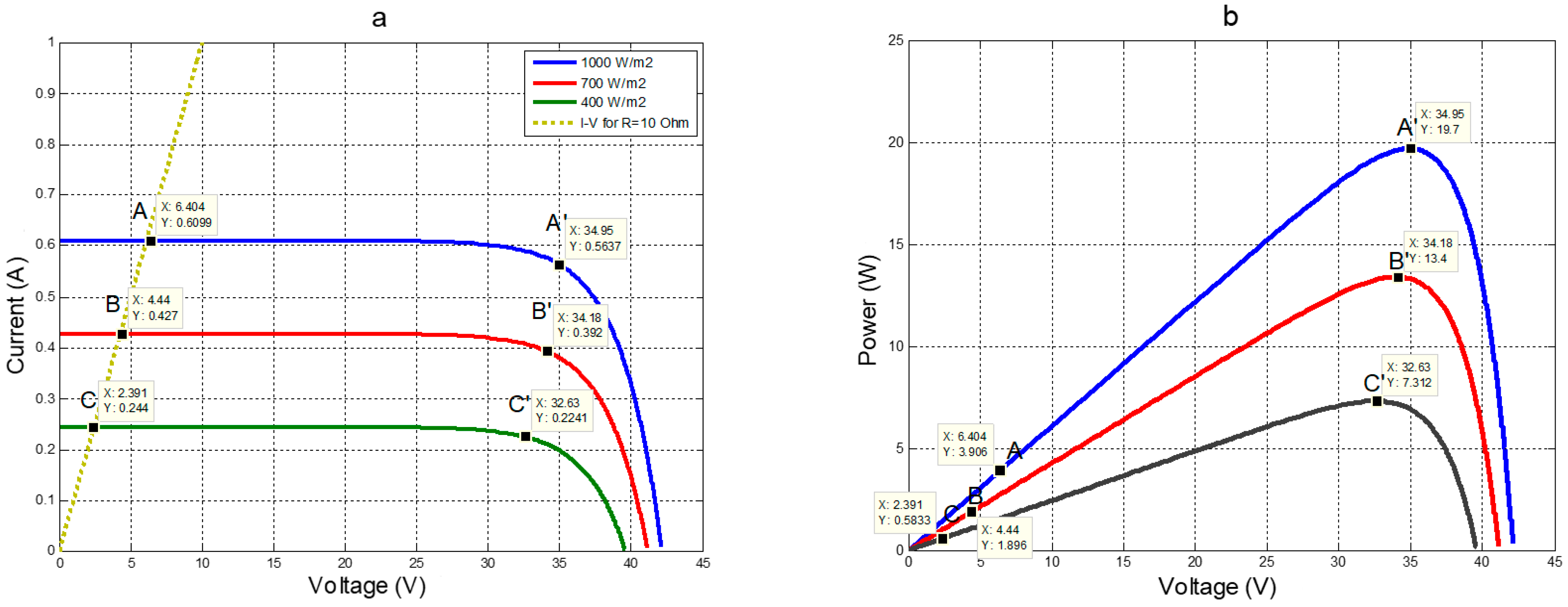
The MPPT (Maximum Power Point Tracking) charge controller is an advanced device that tracks the maximum power point on the current-voltage characteristics of photovoltaic modules. This is a key element in a photovoltaic system that allows you to maximize the amount of energy supplied to the batteries by solar panels. MPPT controllers are intelligent devices that monitor the voltage and current on solar panels and adjust based on this to find the best power point.
Thanks to advanced algorithms, MPPT controllers offer many benefits:
-
They constantly monitor the voltage and current on the solar panel to provide the greatest possible power to charge the battery.
-
MPPT technology allows you to charge batteries with a lower nominal voltage than the photovoltaic circuit, which increases the efficiency of the charging process.
-
MPPT controllers can reduce the average battery charging time by 20-30%, which is a significant advantage compared to standard PWM controllers.
These advantages make MPPT controllers an excellent choice for photovoltaic systems.
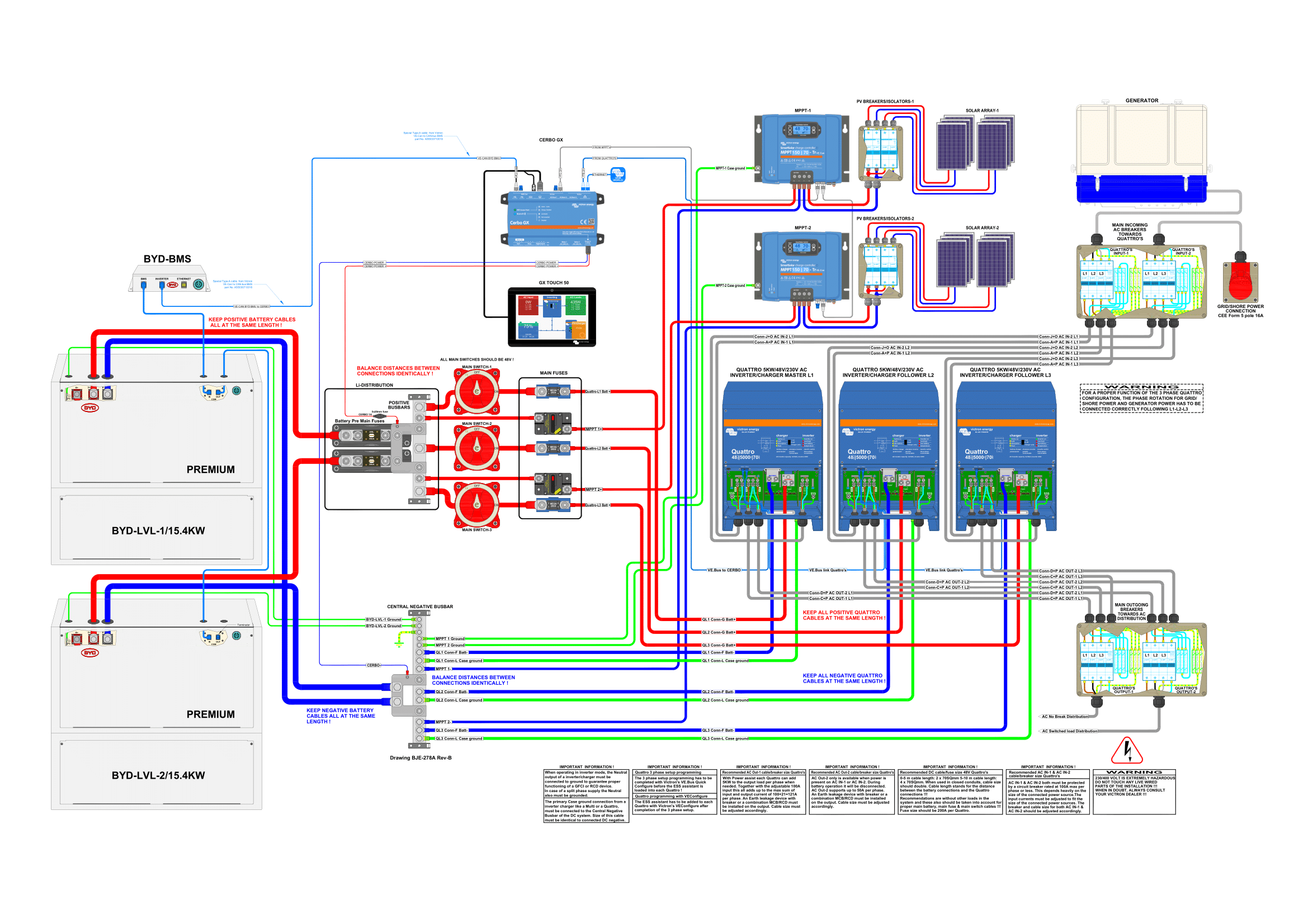
MPPT solar controllers provide an efficiency of up to 98%, which is much higher compared to traditional PWM systems which reach around 78%. Thanks to this, MPPT controllers are able to significantly increase the amount of energy obtained from solar panels, which translates into greater savings and more efficient use of natural resources.
Why is it worth investing in an MPPT controller?

Investing in an MPPT solar charge controller brings many benefits. First of all, MPPT controllers are able to increase battery charging efficiency by:
-
Constantly tracking and selecting the best power point on the solar panel
-
optimization of the charging process
-
faster and more effective battery charging
-
longer battery life
-
greater savings in the long run.
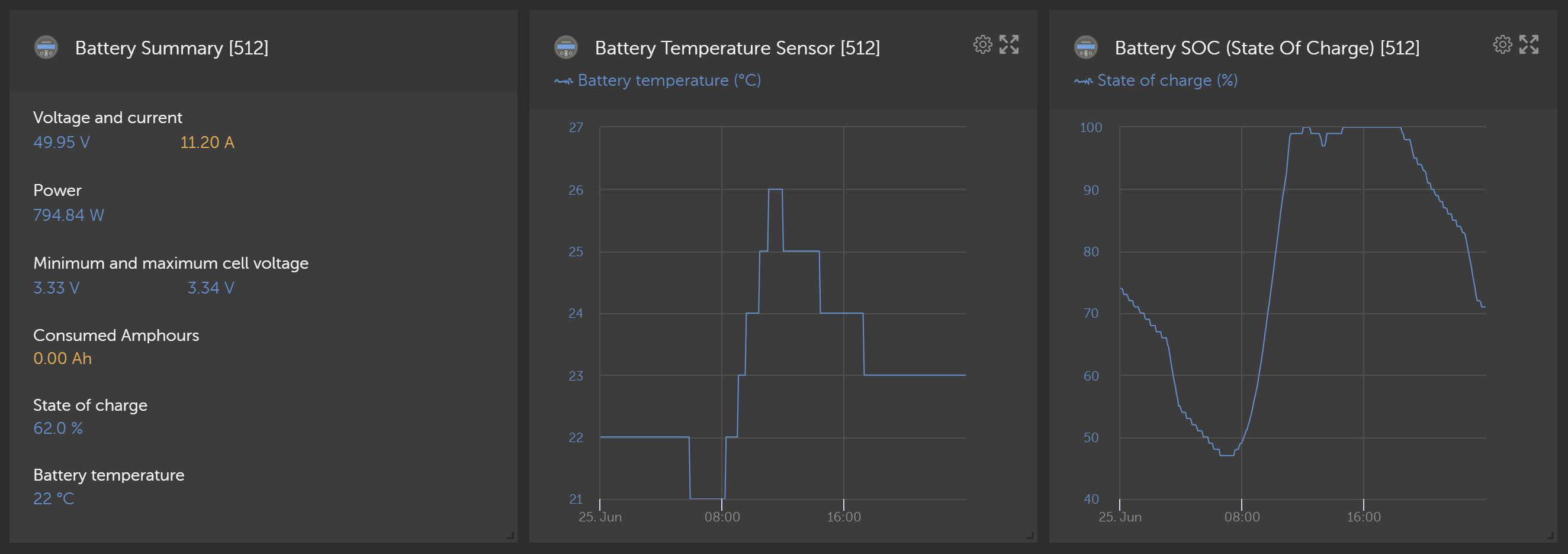
Some MPPT controllers offer battery temperature monitoring, which helps in optimal charging and extending battery life. MPPT controllers are most effective in large photovoltaic systems where the voltage difference between the solar panels and the battery is significant. Investing in such a system brings not only financial benefits, but also greater energy independence and a more ecological approach to energy management.
How to choose the right MPPT controller?

Choosing the right MPPT charge controller is crucial for the efficiency of the entire photovoltaic system. When selecting an MPPT controller, consider:
-
maximum voltage of solar panels
-
maximum charging current of the device
-
matching the MPPT regulator to the output voltage of the photovoltaic system
-
compatibility of the regulator with the type of battery we want to manage.
To make it easier to choose the right regulator, it is worth using the MPPT calculator, which analyzes the technical parameters of solar panels and helps you choose the right device. In the following sections, we will discuss in detail how to use the MPPT calculator and how to interpret the markings on Victron regulators.
MPPT calculator – a helpful tool when choosing
The MPPT calculator is an extremely useful tool that helps you choose the right charge controller for a specific set of solar panels. The calculator analyzes the voltage and current generated by the panels, allowing you to precisely adjust the regulator to optimize the charging process and maximize system efficiency.
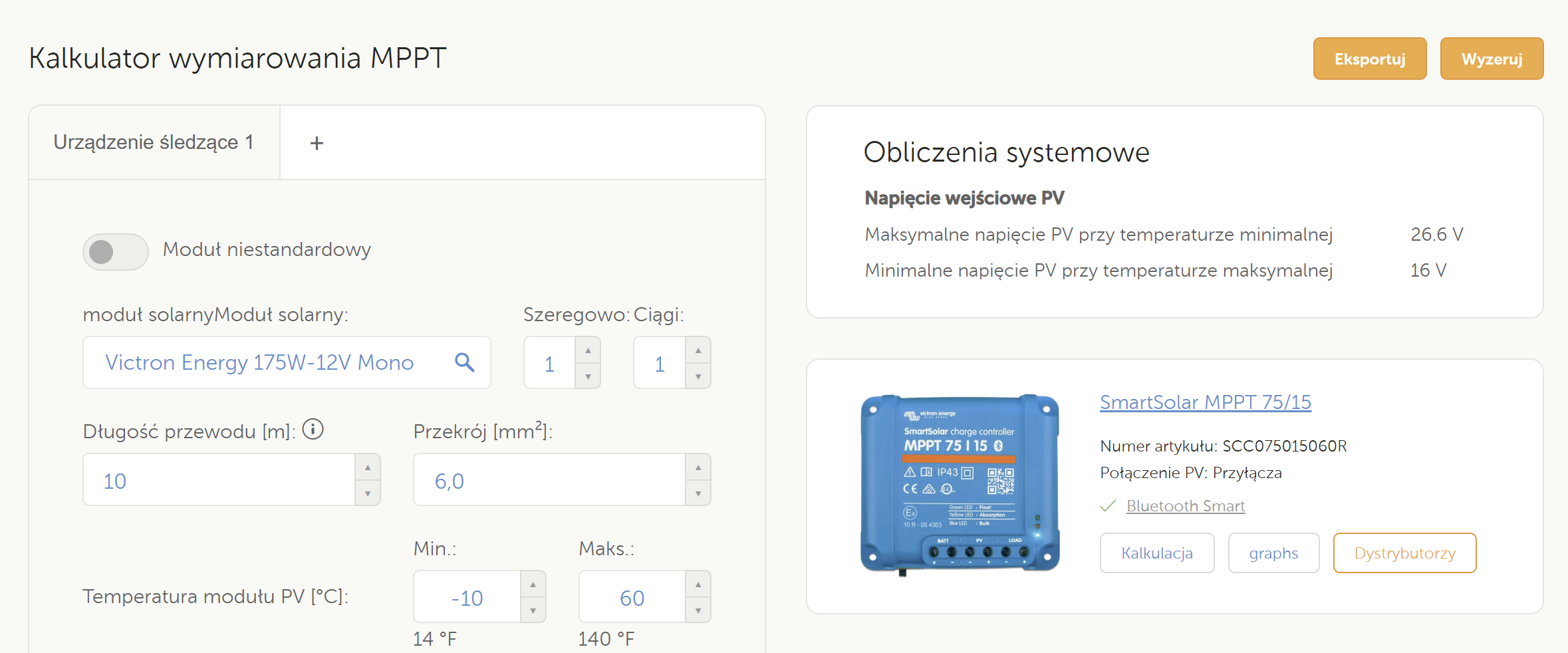
Users can use the free MPPT calculators available online to enter the specifications of their connected solar panel array and see which charge controller will be best for their installation. Such a tool is invaluable, especially for people who are just starting their adventure with solar energy and want to be sure that their system will operate with maximum efficiency.
Victron MPPT controller designations
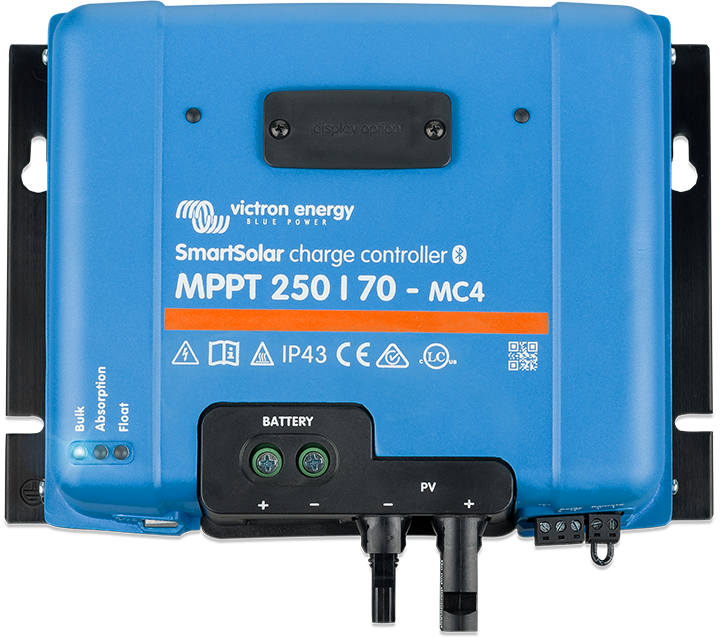
Victron MPPT regulators have markings that indicate the maximum charging voltage and current of the device. For example, in the SmartSolar MPPT 250/60 model, the number 250 refers to the maximum open circuit PV voltage (250V) and the number 60 refers to the maximum charging current (60A). This type of markings are extremely helpful when choosing the right regulator, because they allow you to quickly assess whether a given model will be compatible with our photovoltaic system.
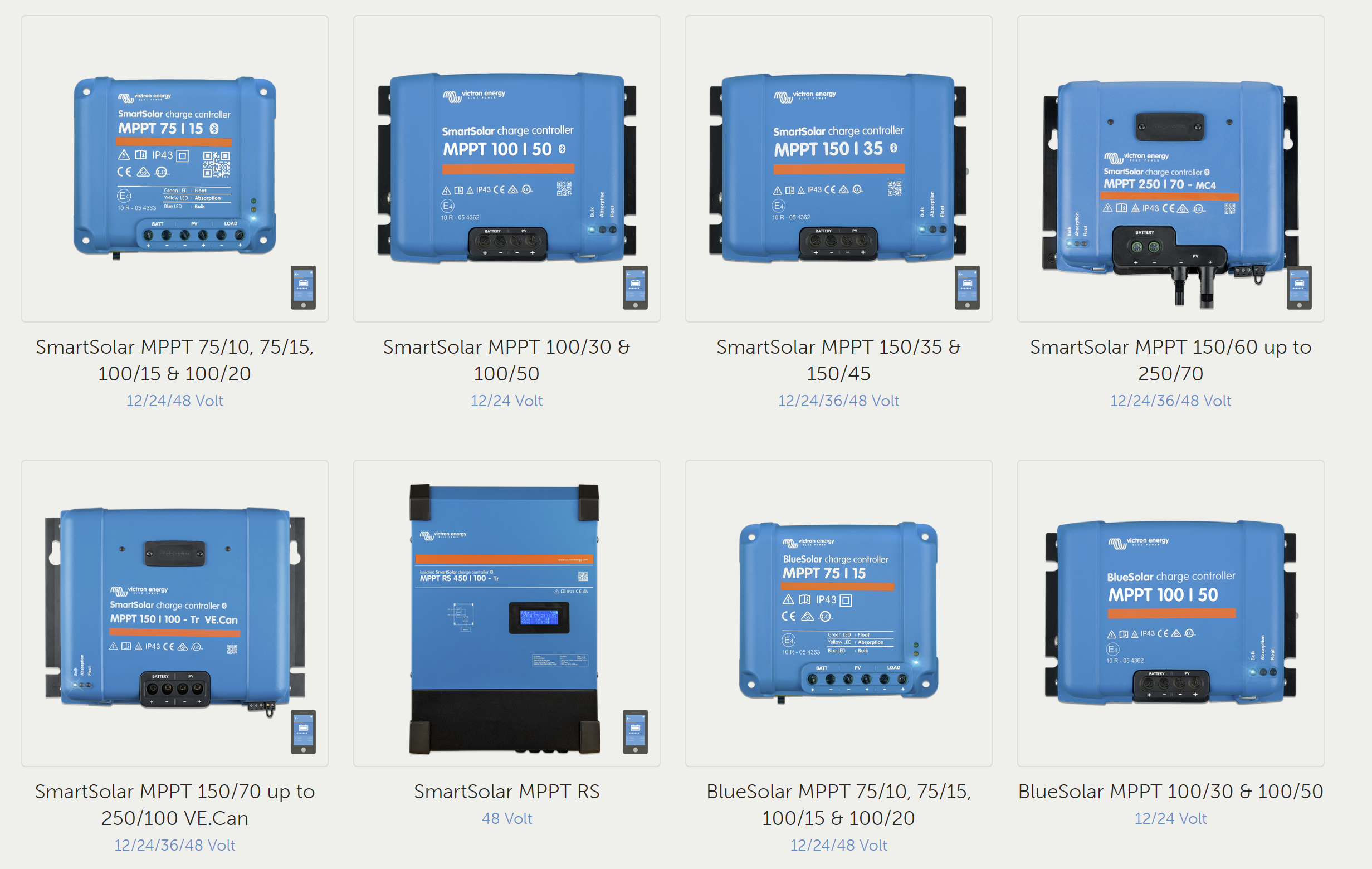
An example is the SmartSolar MPPT 250/60 model, which is able to accept a maximum DC voltage of 250V, making it an ideal choice for high voltage systems. Thanks to such markings, users can easily find the regulator that best suits their needs and provides the appropriate output voltage.
MPPT controllers and PWM controllers – comparison
MPPT and PWM controllers have different applications and offer different benefits. MPPT controllers are more efficient at converting energy from solar panels, achieving up to 30% more power than PWM controllers. PWM controllers in full sunlight offer only a few percent of the power of the photovoltaic module, which makes them less effective compared to MPPT controllers.
Although PWM controllers are cheaper, their lower efficiency can lead to greater energy loss over a longer period of time. MPPT controllers, although more expensive, offer higher efficiency, which translates into greater savings in the long run. MPPT controllers are particularly beneficial in higher voltage systems or where temperature differences are significant.
PWM regulators – when is it worth using them?
PWM controllers are more cost-effective in small solar systems where costs must be minimized. They are suitable for systems where solar panels are relatively small and operation in full sunlight is frequent. PWM controllers are best used in simple installations where there is no need to maximize energy efficiency.
PWM charge controllers are ideal for use with photovoltaic modules designed for 12V or 24V systems. They are effective and efficient in maintaining a constant charging voltage. In such cases, where solar panels are small and operation in full sunlight is frequent, PWM controllers are sufficient and more economical.
MPPT controllers – an advantage in difficult weather conditions
MPPT controllers have a significant advantage in difficult weather conditions where the intensity of sunlight is variable. Thanks to advanced algorithms, MPPT controllers are able to dynamically adapt to changes in light intensity, maximizing efficiency even on cloudy days. Compared to PWM controllers, which work best in full sunlight, MPPT controllers are more effective in conditions with low light intensity.
MPPT controllers, such as those manufactured by Victron Energy, detect the most optimal point of maximum power and block other points on the curve with lower efficiency, allowing the battery to be charged efficiently even when the solar panels are partially shaded. By using a maximum power tracking point, MPPT controllers are an ideal choice in places where weather conditions are unpredictable and cloudy days are common. This is where maximum power points play a key role in system efficiency.
Energy storage systems with MPPT controllers

Energy storage systems based on MPPT controllers are more efficient because the battery is charged directly from the solar panels, without the need to convert to alternating current (AC). MPPT solar controllers charge batteries directly from the panels, which increases charging efficiency and shortens the time needed to fully charge the batteries.
Thanks to the use of MPPT technology and optimization of the charging process, energy storage systems can accelerate battery charging by 20-30% compared to traditional solutions. This means that the batteries are charged faster, which is especially important during periods with shorter sunlight, such as autumn and winter. MPPT technology also allows you to charge batteries with a lower nominal voltage than the PV circuit, which further increases the efficiency of the system by optimizing the charging process.
Additional functions and protections in MPPT controllers
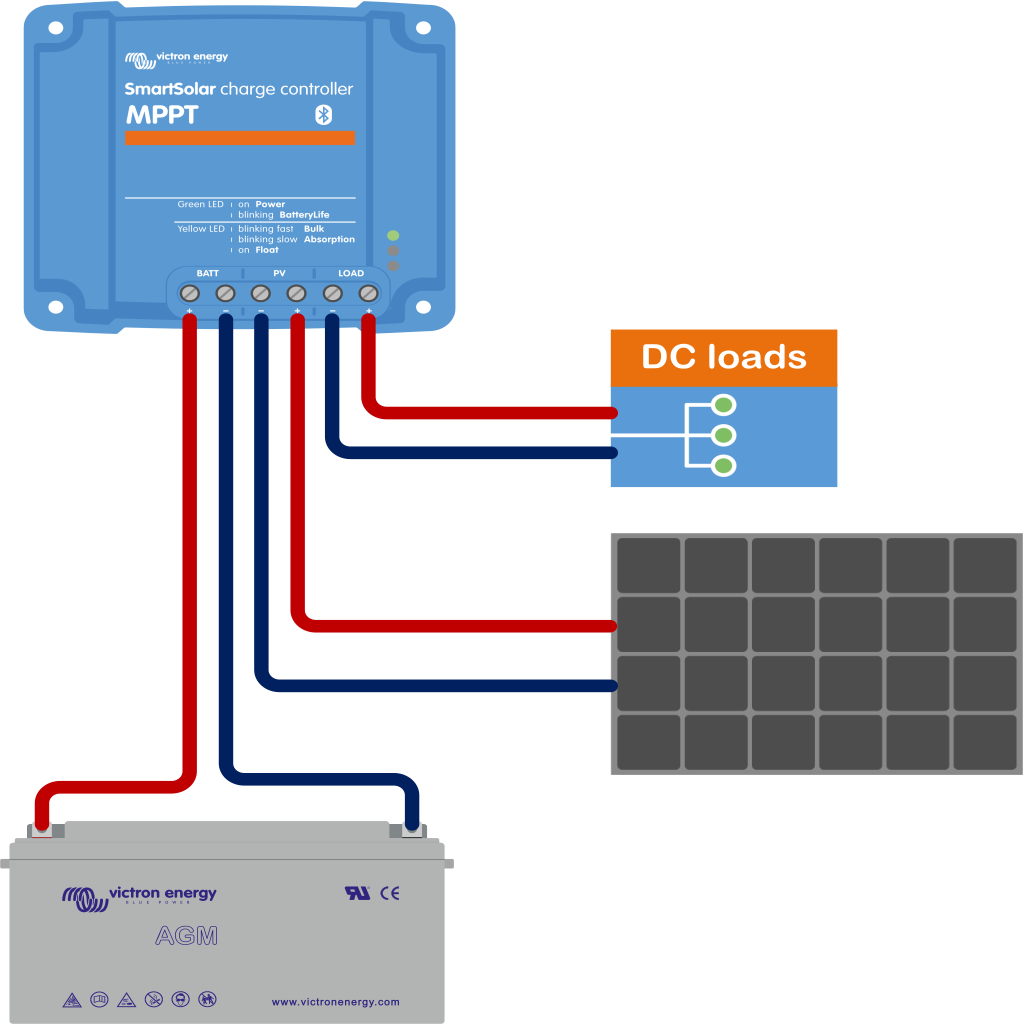
MPPT controllers offer a range of additional features and protections that increase their value and reliability. For example, Victron Energy SmartSolar controllers have a built-in Bluetooth interface, which allows you to program and monitor the device using a smartphone. The remote communication function via Bluetooth or VE.Direct and VE.Bus communication ports allows you to control the battery charge or discharge status, the charging process, detect possible errors, change settings and optimize the installation.
Advanced MPPT controllers often feature fully automatic protection features, such as automatic restart after overload, which prevents damage to the system and ensures continuous operation. Built-in short-circuit protection and reverse polarity protection are standard elements of modern MPPT regulators, which protect the system against incorrect wiring and other potential hazards.
The most popular MPPT controller models on the market
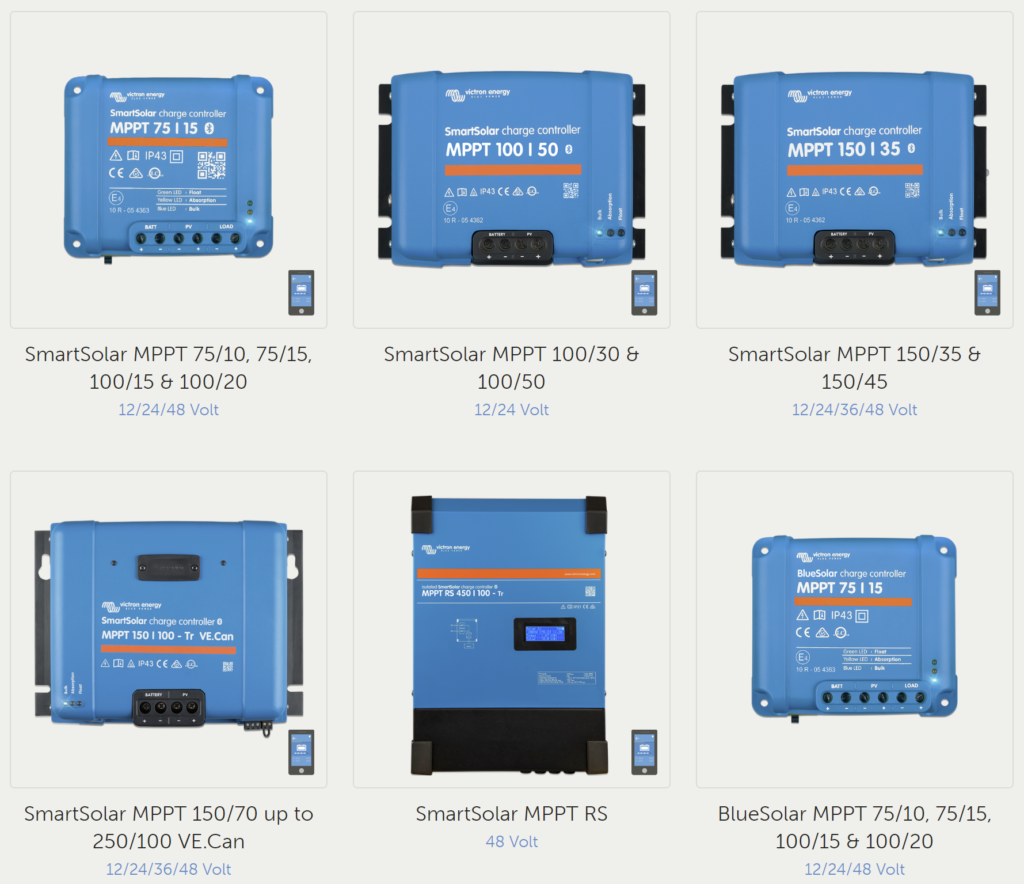
There are many MPPT controller models available on the market, each offering different features and specifications. One of the most popular models is Victron Energy SmartSolar MPPT 150/70-Tr, which has automatic voltage selection of 12/24/48V and is compatible with the Bluetooth interface, which allows for easy programming and monitoring of the device using a smartphone.
Other popular models include Victron Energy SmartSolar MPPT 75/10 and Victron Energy SmartSolar MPPT 75/15. The 75/10 model operates with a voltage of 75V and a current of 10A, and has a Bluetooth function, which makes it easier to operate using a smartphone. The 75/15 model supports a voltage of 75V and a current of 15A, has automatic voltage selection of 12V or 24V and a Bluetooth function.
For more advanced systems, the Victron Energy SmartSolar MPPT RS 450/100-Tr model is suitable for a voltage of 450V and a current of 100A, has a Bluetooth interface and can manage a maximum panel power of 5.8 kW.
Summary
MPPT controllers are advanced devices that significantly increase the efficiency of photovoltaic systems. Investing in an MPPT solar charge controller brings benefits in the form of higher charging efficiency, shorter battery charging time and better adaptation to changing weather conditions. When choosing the right MPPT controller, it is worth using the MPPT calculator and paying attention to the markings of manufacturers such as Victron. MPPT controllers offer additional features and protections that increase their reliability and value. This makes MPPT controllers the perfect choice for anyone who wants to maximize the efficiency of their photovoltaic system.
Frequently Asked Questions
What is an MPPT controller?
The MPPT (Maximum Power Point Tracking) controller is a device that optimizes the battery charging process by tracking the maximum power point on the current-voltage characteristics of photovoltaic modules, which allows you to maximize the amount of energy supplied from solar panels.
Why is it worth investing in an MPPT controller?
It is worth investing in an MPPT controller because it increases the efficiency of battery charging, shortens charging time and better adapts the system to changing weather conditions, which translates into longer battery life and greater savings.
How to choose the right MPPT controller?
When selecting the appropriate MPPT controller, consider the maximum voltage of the solar panels, the maximum charging current and compatibility with the battery type. The MPPT calculator can be useful for accurate device selection.
What are the differences between MPPT and PWM controllers?
MPPT controllers are more efficient than PWM controllers, achieving up to 30% more power from solar panels, especially in changing weather conditions.
What additional features do MPPT controllers offer?
MPPT regulators offer additional features such as Bluetooth interface, automatic restart after overload, short circuit protection and reverse polarity protection. They can be found, for example, in regulators from Victron Energy.
 English (UK)
  Polski